Danish CCS Ecosystem
Overview of the Danish CCS ecosystem, but not including suppliers.
- Government and legal
- Ports
- Developers
- Transportation
- Storage
- Network & clusters
- GTS Institutes
- Consultants
- Research
- Industry and hubs
- Gas system operators
- Bibliography
Denmark’s CCS (Carbon Capture and Storage) ecosystem is a dynamic and growing sector that plays a central role in the country’s ambition to achieve climate neutrality by 2050 and reduce greenhouse gas emissions by 70% by 2030. The ecosystem encompasses a wide range of actors, including public institutions, ports, developers, transporters, storage operators, networks, clusters, research institutions and industry organisations. These collaborate to establish a robust value chain for CO2 capture, transport, and storage, backing the GEUS report (Hjelm2020) focusing on the North Sea as a storage destination. This article provides an overview of key actors and their roles, but note that technology suppliers for CO₂ emitters are not included due to the changing nature of the market. For specific requests about suppliers or additional information, find my contact details in the footer of this website.
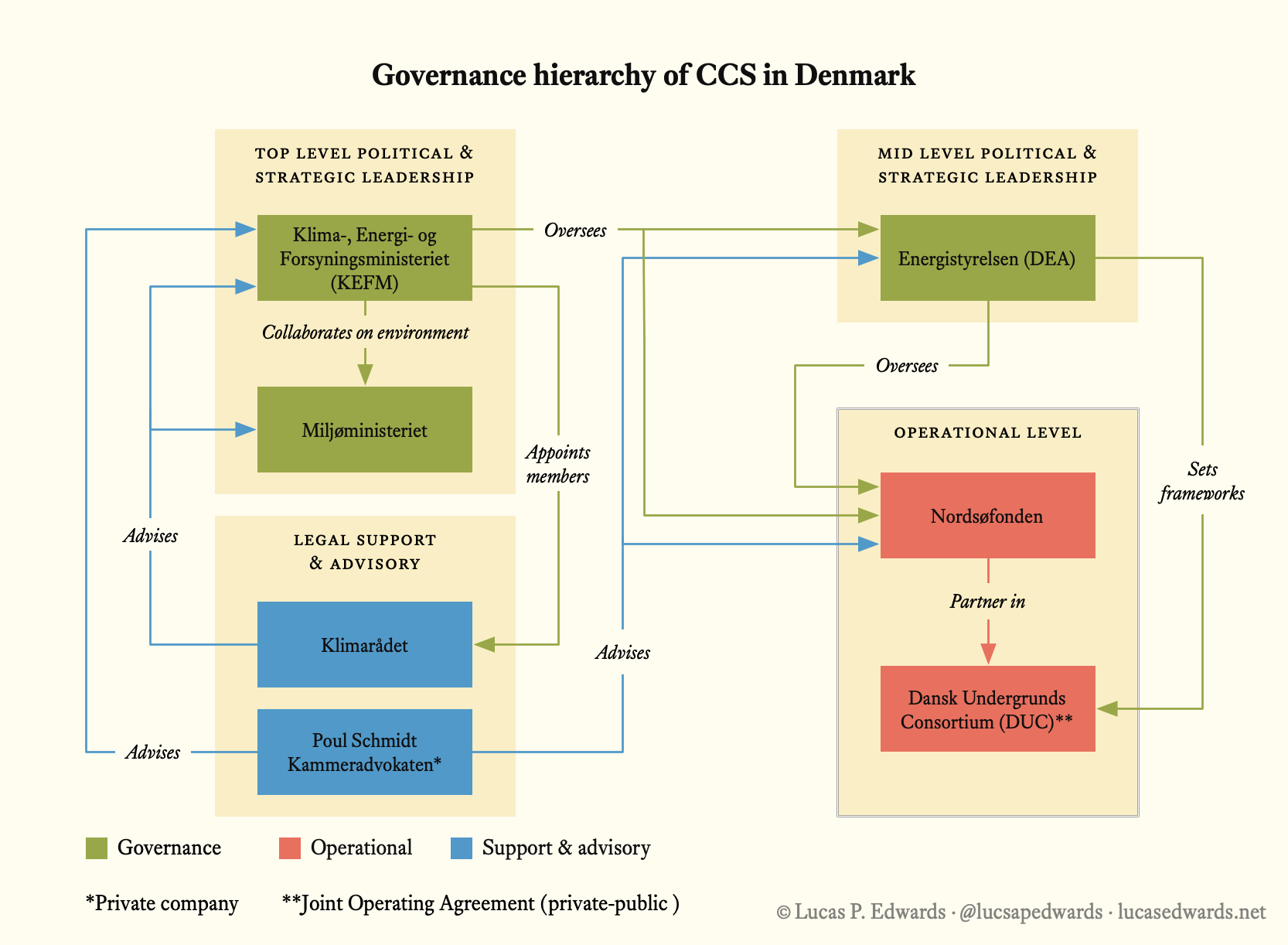
Government and legal
- Minister for Climate, Energy and Utilities
- Klima-, Energi- og Forsyningsministeriet (KEFM)
- Nordsøfonden
- Dansk Undergrunds Consortium
- Klima, Energi- og Forsyningsministeriet
- Energistyrelsen
- Klimarådet
- Miljøministeriet
- Poul Smith Kammeradvokaten
Ports
Current CCS projects
- Port of Aalborg
- Port of Avedøreværket
- Port Esbjerg
- Port of Fredericia
- Port of Hirtshals
- Port of Grenaa
- Kalundborg
- Copenhagen Malmø Port
- Odense Port
Planning CCS projects
Developers
- INEOS Group
- Equinor
- Wintershall Dea
- Normod Carbon
- Copenhagen Infrastructure Partners (CIP)
- BlueNord
- Fidelis
- AkerBP
- HarbourEnergy
- Vattenfall
- Harbour Energy
- BioCarb
- Mitsui&Co
- TotalEnergies
- BioCirc
- Ørsted
- Storegga
Transportation
Storage
- GreenSand
- ProjectRuby
- Gas Storage Denmark
- Greenstore
- Norne carbon storage hub
- Gas Storage Denmark
- CO₂ Storage Kalundborg
- CarbonCuts
Network & clusters
- Energy Cluster Denmark
- Biogas Danmark
- CCUS alliancen
- CO₂Vision
- Clean
- CCS Zealand
- INNO-CCUS
- Triangle energy alliance
- Carbon Capture Cluster Copenhagen
- Danske Havne
GTS Institutes
Consultants
- COWI
- Dansk Geoteknisk Center
- PWC
- Process engineering A/S
- Ross Energy
- Ea Energianalyse
- Sweco
- Ramboll
- Semco
- Axcel
Research
- GEUS
- DTU
- DTI
- Aalborg University
- SDU
- Aarhus University
- Novo Nordisk Foundation CO₂ research center
- Erhvervslivets tænketank
Industry and hubs
- Drivkraft Danmark
- Dansk Erhverv
- Hydrogen Valley
- Green Power Denmark
- GreenHub Denmark
- CO₂ Hub Europe
- DS dansk standard
- Dansk industri
- Concito
- Danske Rederier
- Dansk Fjernvarm